
Crescent City Criminal History Checks
Choose the first office by event, not by convenience. Crescent City Police owns its incident and arrest reports. Del Norte County Jail records local bookings. Del Norte Superior Court keeps filed cases and dispositions. California DOJ offers fingerprint-based review of the requester’s own state rap sheet, but no public name search for other people.
- Contact Crescent City Police when the needed document is a city incident or arrest report.
- Make the required appointment with the police records specialist and provide the event details that can locate the file.
- Check Citizen RIMS for a Del Norte County Jail booking or current custody after a city arrest.
- Use Del Norte Superior Court for filed charges, hearing dates, orders, and final disposition.
- Use California DOJ Live Scan record review only to inspect your own fingerprint-based California criminal record.
A report number is the strongest local key. If it is unknown, give the involved name, approximate date, and location. Release still depends on the requester’s role and California law.
Crescent City Is the County’s City
Crescent City is Del Norte County’s county seat and only incorporated city. The 2020 Census counted 6,673 residents. Other named communities in the county are unincorporated or census-designated, so they do not have separate city governments or police-record systems for this project. This local structure explains why Crescent City records quickly connect to county offices.
City Hall and the City Clerk are at 377 J Street. Police are on G Street, Superior Court is on H Street, and the Sheriff and jail are on Fifth Street. Their close locations do not merge their files. A request for a City Hall administrative record, police incident narrative, jail booking, and court judgment still goes to four different custodians.
Records at Crescent City Police
Crescent City Police Department is at 686 G Street, Crescent City, CA 95531. Its main number is (707) 464-2133 and fax is 707-465-5955. The public hours documented by the city are Monday through Thursday, 7:30 a.m. to 5:30 p.m., with closure from noon to 1 p.m. The department’s records specialist handles report-copy appointments.
The city FAQ does not offer a self-service report download. It directs a requester to call during business hours and make an appointment to receive records. Fees may apply, though the official material reviewed does not state a fixed amount. Bring the report number when known. An involved person’s name and the incident date and location can also help staff find the Crescent City file.
Crescent City Report Appointments
Appointment access is the main city-specific detail. Call the police records specialist rather than arriving with an expectation of an instant counter search. Explain whether the request concerns an incident report, arrest report, or property record. Staff may need to confirm identity, involvement, or authorization before releasing protected material. Active investigations, victim facts, juvenile information, and sealed records can be withheld or redacted.
A short preparation list keeps the visit focused:
- Report or incident number, if available
- Full name used in the report
- Approximate incident date and location
- Identification or authorization if staff requires it
- A way to pay any applicable records fee
These items reflect the documented process and useful search keys. The police FAQ does not publish a formal downloadable request form or exact identification rule.
Booking and Arrest Records in Crescent City
Crescent City does not advertise a separate city jail. When city officers make a custodial arrest, booking generally routes to Del Norte County Jail at 650 Fifth Street. The city officer creates the police report. Jail staff create intake and custody records. Citizen RIMS may then show a recent arrest or incarcerated-person entry, depending on public display and timing.
The city report and county booking are related but not identical. A police report describes what officers reported or investigated. A booking entry records intake, charges at arrest, and custody facts. If the District Attorney later files a case, the court may use different charges. For fuller county booking detail, the Del Norte County arrest search explains the official Sheriff and jail channels.
Crescent City Uses Sheriff Dispatch
The Crescent City Police FAQ routes emergency calls through 911 to the Sheriff’s Office Dispatch Center. It gives (707) 464-4191 for non-emergency calls. That number belongs to the Del Norte County Sheriff’s Office, while (707) 464-2133 is the city police administrative number. Use dispatch to report an event or seek an active response. Use the police office to arrange access to an existing Crescent City report.
This division can trip up record seekers. Calling dispatch does not replace the records appointment, and the city police office is not the court clerk. Once prosecutors file a matter, hearing and disposition questions move to Del Norte Superior Court at (707) 464-8115.
The Crescent City Municipal Court File
No separate Crescent City municipal criminal court was found in the official sources. The city FAQ directs court and traffic fines to Del Norte Superior Court. That court handles local felony, misdemeanor, traffic, and related trial matters. Thus the correct city-level answer is a county Superior Court file, not an invented municipal docket.
| Court Name | Superior Court of California, County of Del Norte. |
|---|---|
| Case Types Heard | Locally filed felony, misdemeanor, traffic, and related trial-court matters. |
| Case Lookup Channel | Registered Del Norte portal, criminal calendar, or records counter at 450 H Street, Room 209. |
| What the File Shows | Case number, filed charges, hearings, pleas, orders, disposition, and sentence when public. |
| Copies & Fees | Ask the court records office; no current local copy fee was captured in the research. |
The court says a case number is the easiest search key. Its portal requires registration and limits general public searches to 45 cases per day. It also warns that current filings may not yet appear.
Crescent City Hall Record Boundary
The official Crescent City Clerk page shows the civic counter at City Hall and links readers toward Del Norte Superior Court.
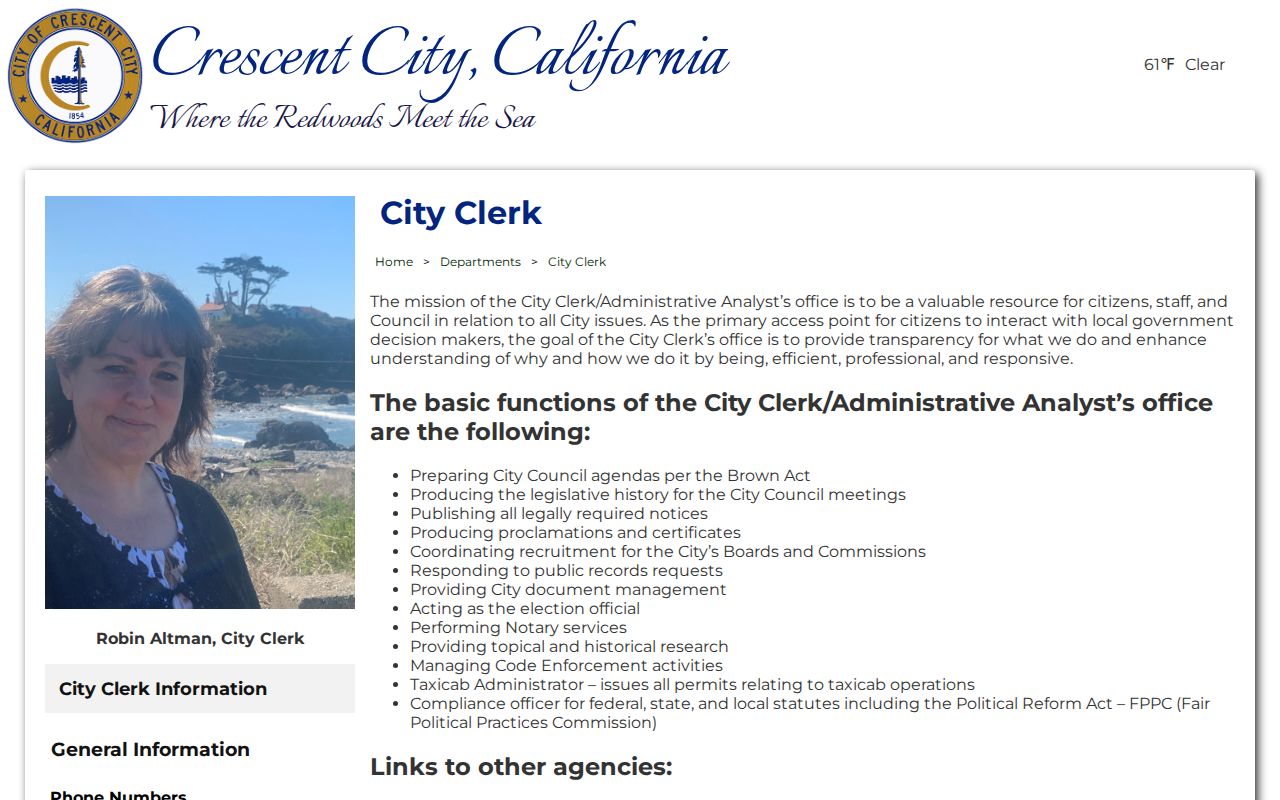
That routing helps define the boundary. The City Clerk handles city government records within its custody. Police reports remain with Crescent City Police. Criminal and traffic court files remain with the Superior Court. A City Hall request should not be used as a substitute for either law-enforcement or court procedures.
Call City Hall at 707-464-7483 for city administrative records. For a police file, call the department records specialist. For court copies or a case outcome, contact the Superior Court records office. Naming the desired document prevents needless transfers among nearby counters.
How Crescent City Records Reach the County
A reported event can create several records at different times. Crescent City Police first makes the incident or arrest report. A custodial arrest adds a Del Norte County Jail booking. The District Attorney then decides whether to file charges. A filing creates a Del Norte Superior Court case. Fingerprints and final dispositions may later update the California DOJ repository.
Record flow: Crescent City Police Department › Del Norte County Jail and Superior Court › California Department of Justice
The flow is not automatic in every public screen. Citizen RIMS concerns Sheriff public-safety and custody data. The court portal concerns filed matters. DOJ record review concerns the subject’s fingerprint-supported state history. Check the stage that answers the question, then verify later outcomes at the court.
Crescent City Police Transparency Records
Crescent City Police maintains an SB 978 transparency page for department materials. Those records concern policies, practices, and public accountability, not a name-based criminal-history database. They can help someone understand the rules behind a report, complaint, or release decision without exposing protected case facts.
The city also documents a citizen complaint process. A complaint form goes to the Chief of Police at 686 G Street or the email listed in the police FAQ. This process addresses department conduct. It is separate from a criminal report request and does not alter a court case. Commendations use the same office route.
Property release is appointment-only. Evidence waits until the case is adjudicated. Safekeeping property is held 60 days, while found property is held 90 days. These timelines explain why a property inquiry can remain with police even after court activity begins.
Each route produces a different response. A transparency-policy request may return a standing department document. A complaint submission starts an administrative review. A property appointment concerns an item held by police. None provides the court’s final ruling on a charge. When an evidence hold depends on adjudication, get the case number from the police report or property contact, then ask Del Norte Superior Court about the public case status. Police staff control release of the item, but court records show whether the linked prosecution has reached a disposition.
People seeking their own Crescent City report should also distinguish a correction request from a complaint. If a report appears to contain an error, identify the exact report number, field, and supporting document for the records specialist. The department determines its record procedure. If the disputed fact concerns a filed charge or outcome, verify the Superior Court file as well. A police narrative, jail entry, and court disposition can lawfully state different things because they capture different stages of the same event.
Crescent City Crime Data Sources
Official interactive sources provide the safest route to current Crescent City crime data. No clean, current numerical export was captured in the county research, so old private ranking tables should not be treated as present conditions. Use agency and government tools, and check the year and reporting coverage before comparing totals.
The FBI Crime Data Explorer supplies UCR and NIBRS agency or jurisdiction searches.
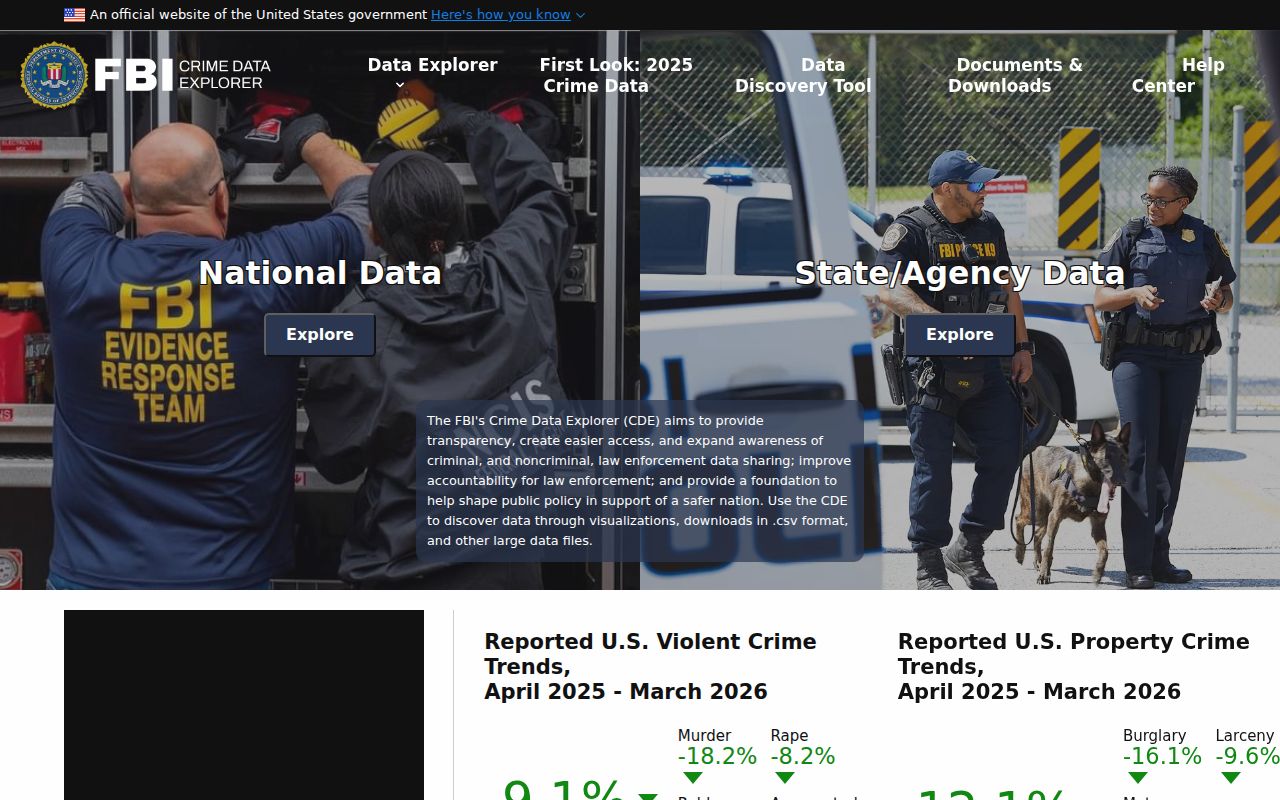
The image shows the official federal search entry point. California DOJ OpenJustice provides the state layer, while Citizen RIMS offers a more current view of Sheriff calls and activity. Each source measures something different. Crime statistics describe reported events in an area; they do not provide an individual’s record or prove the status of a specific case.
Crescent City Record Access Rules
California law separates public records from confidential or restricted material. Crescent City police records may be requested under the California Public Records Act, but exemptions can protect active investigations, victims, juveniles, safety information, and other sensitive facts. Court records follow California court-access rules. State rap-sheet dissemination is narrower and does not create a public DOJ name search.
Key Statutes:
California Public Records Act gives access to public agency records unless a lawful exemption applies.
Penal Code section 11105 limits dissemination of state summary criminal-history information.
California Rules of Court, rule 2.400 et seq. defines court records and the public-access framework.
A denial or redaction does not mean the event did not occur. It means the requested document or field is not publicly releasable in that form. Ask the custodian whether a public portion, docket entry, or final disposition is available.